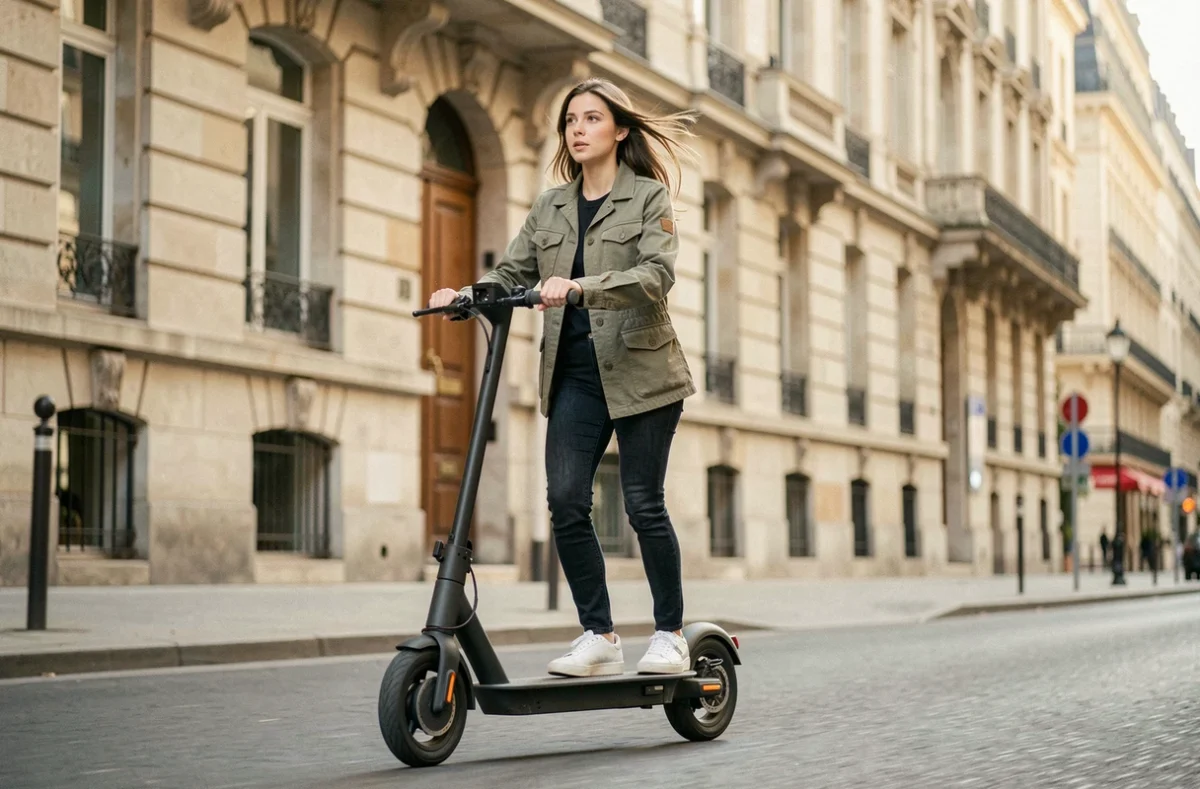
Scooter, bike, skateboard: each vehicle rolls, but none meets the same travel, storage, or regulatory constraints. Choosing your urban mode of transportation involves considering three concrete parameters: the daily distance traveled, the terrain of the route, and the legal obligations of the area crossed.
Local regulation of PMDs: the parameter that most comparisons ignore
The Highway Code establishes a national framework for motorized personal transportation devices (PMDs), a category that includes electric scooters but not electric bikes. The maximum speed allowed is capped at 25 km/h on public roads.
Since 2026, departmental decrees have added local obligations that vary from one area to another. In the North, wearing a helmet has become mandatory for scooters, gyropods, and other PMDs, according to France 3 Hauts-de-France. Similar measures have been adopted in Yvelines, Pas-de-Calais, and Loire-Atlantique. These decrees generally do not apply to electric bikes.
In practice, a home-to-work commute that crosses two departments may require wearing a helmet in one section but not in the other. Before making a purchase, it is essential to consult the applicable prefectural decrees for your actual route, not just the national regulations. To compare the technical characteristics of the various available vehicles, detailed sheets on 1001roues.net allow you to cross-reference specifications with your own travel constraints.
Distance and terrain: bike, scooter, or skateboard based on route profile
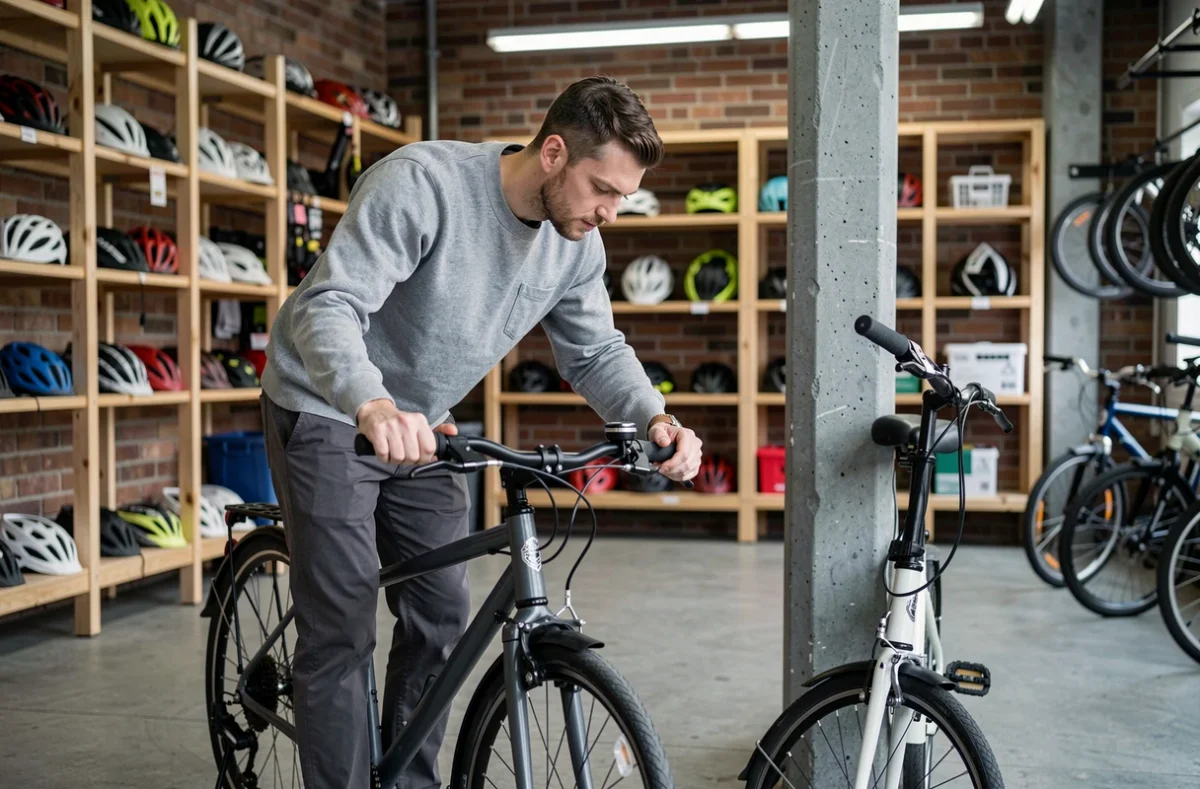
The daily distance is the first selection filter. A skateboard or cruiser is suitable for short trips, typically the connection between a public transport stop and the workplace. Beyond a few kilometers, muscle fatigue and the lack of standardized braking make usage impractical.
The electric scooter effectively covers trips of 5 to 15 km on flat terrain or with slight elevation changes. Its main advantage is its compactness when folded, making it easier to combine with buses, trams, or trains.
The bike, whether electric or mechanical, remains the most versatile as soon as the route exceeds 10 km or when the terrain requires regular climbs. Electric assistance absorbs elevation changes without turning the journey into a sporting challenge. On the other hand, parking and the risk of theft pose real problems that a folding scooter avoids.
Intermodality and storage at the office
The choice is not limited to the road. The question of the last meter is just as important as that of the first kilometer. A cruiser can slide under a desk. A folded scooter fits in a closet. A bike requires a dedicated space or an outdoor attachment point.
- Skateboard or cruiser: minimal bulk, can be carried by hand on public transport, suitable for short connections on smooth surfaces
- Scooter (electric or mechanical): foldable, compatible with most public transport, variable autonomy depending on the model
- Mechanical or electric bike: the widest range, but requires secure parking space and a robust lock
Accident rates and safety equipment: a real gap between vehicles
Recent road safety data shows a significant gap between vehicle categories. In 2025, 79 PMD users died in France, and about 1,200 were seriously injured, marking an increase in serious injuries compared to 2024. The accident rate weighs more heavily on electric scooters than on electric bikes.
This difference is partly explained by the riding position. On a scooter, the center of gravity is high, the wheels are small, and even the slightest pothole can cause a fall. The bike offers a more stable seating position and larger diameter wheels that better absorb road irregularities.
Equipment to consider based on the chosen vehicle
The helmet is the first investment to consider, regardless of the vehicle. For PMDs, it has become mandatory in several departments. For bikes, it remains highly recommended even where the law does not yet impose it on adults.
- Certified helmet: mandatory for PMDs in the North, Pas-de-Calais, Yvelines, and Loire-Atlantique, recommended everywhere else
- High-visibility vest: required by some departmental decrees for scooters, useful at night for all vehicles
- Active front and rear lighting: mandatory for bikes and scooters, often neglected on skateboards which have no integrated devices
- Quality lock: necessary for bikes, recommended for scooters left outdoors

Concrete selection criteria for a sustainable purchase
Beyond the type of vehicle, the quality of manufacturing determines the lifespan and comfort of daily use. A vehicle used every day undergoes much more wear than one used for leisure, making certain technical criteria decisive.
On an electric scooter, the size of the wheels directly influences comfort and safety. Larger diameter wheels with inflatable tires absorb shocks better than small diameter solid wheels. The battery capacity should cover at least double the daily trip to avoid gradual degradation of autonomy.
For an urban bike, the type of transmission (chain, belt, hub with integrated gears) determines the necessary maintenance. A carbon belt requires neither grease nor regular adjustment, making it more suitable for daily use year-round.
For a commuting skateboard, choosing a cruiser over a classic skateboard makes a difference. The cruiser offers wider and softer wheels, suitable for uneven urban surfaces. A board that is too short or too rigid makes every sidewalk crack uncomfortable.
The purchase budget does not stop at the price of the vehicle. You must also add the helmet, lock, lighting, and plan for an annual maintenance cost. An electric bike is significantly more expensive to purchase, but some local authorities offer subsidies that reduce the bill. Checking local subsidy programs before finalizing your choice can sometimes allow you to move up to a higher range for the same net budget.