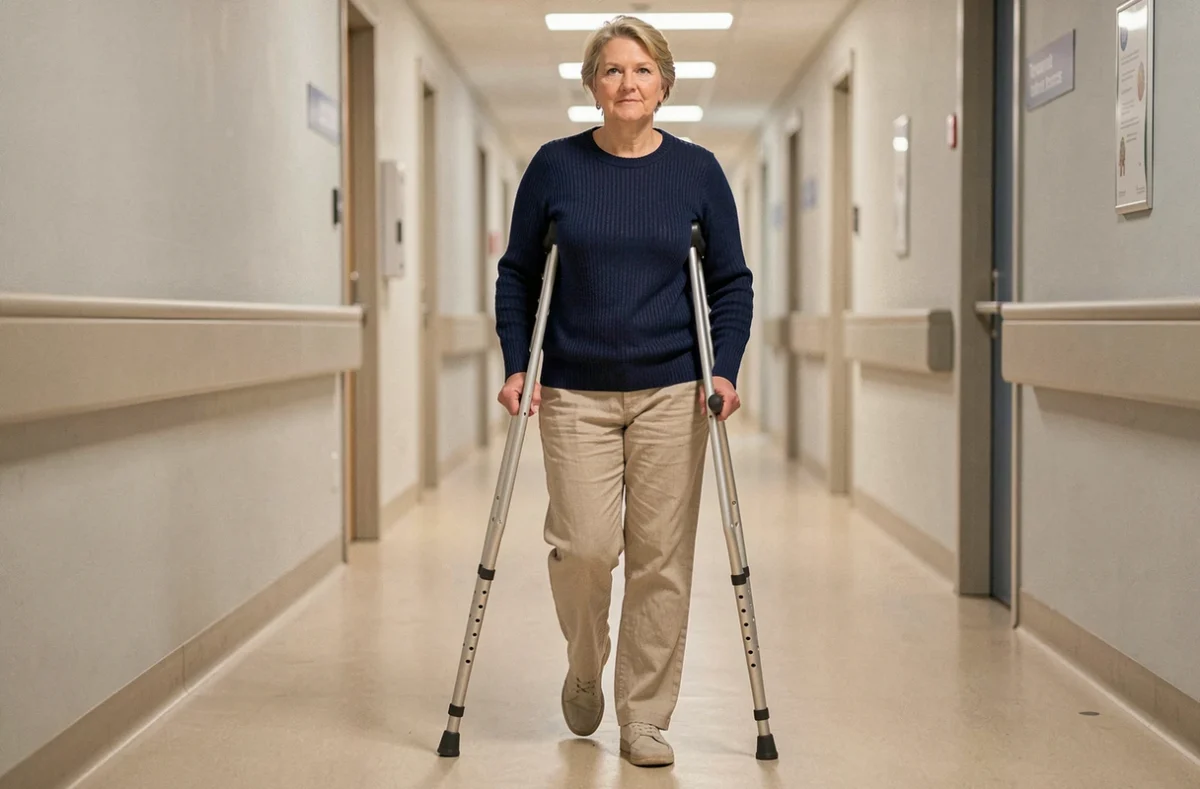
Walking with crutches puts unusual demands on the upper body and changes your balance. The first steps are often hesitant, and poor posture or incorrect adjustment can cause wrist and shoulder pain, or even falls.
Nerve compression and arm pain: the underestimated risk of poorly adjusted crutches
Most online guides focus on walking technique. But the problem starts before the first step, when the crutches are adjusted. Prolonged pressure from axillary crutches under the armpits can compress nerves and cause weakness or numbness in the hands and arms.
This is more than temporary discomfort. Prolonged pressure on a nerve can cause temporary motor problems, sometimes mistaken for poor circulation. Your body weight should rest on the handgrips, never on the underarm pads.
To check the fit, stand with your arms at your sides. Position the tips of the crutches about six inches from your feet. You should be able to fit two or three fingers between the pad and your armpit. The handgrip should be level with your wrist, with your elbows slightly bent. If you experience tingling or persistent discomfort in your hands after a few days of use, ask a healthcare professional to check the fit.
To learn how to walk with crutches safely, checking the fit is an essential first step before you start moving.

Walking with crutches: the weight-bearing pattern that protects your injured leg
Walking with crutches does not replicate a natural walking pattern. It involves transferring weight from the injured lower limb to the arms and torso. There are two main patterns, depending on your medical instructions.
Walking without putting weight on the injured leg
When you are not allowed to put any weight on your injured leg, move both crutches forward together, then swing your body forward by pushing down on the handgrips. Your injured leg must not touch the ground. If possible, bend your knee to keep your foot from brushing the floor.
This pattern quickly tires the arms and shoulders. Take regular breaks, especially during the first few days. Gradually increase the distance as your upper-body muscles adapt.
Walking with partial weight-bearing
When your doctor allows partial weight-bearing, the technique changes. Move the crutches forward at the same time as your injured leg, and distribute your weight between the handgrips and the foot on the ground. Then move your uninjured foot forward. How much weight you can put on the injured leg depends on your medical instructions: do not guess or adjust it based on how it feels alone.
In both cases, keep your back straight and look ahead, not down at your feet. Leaning forward shifts your center of gravity and increases the risk of losing your balance.
Going up and down stairs with crutches: lead with your uninjured leg on the way up
Remember this simple rule: lead with your uninjured leg going up, and your injured leg going down.
- To go up: place your uninjured foot on the step above, then push down on the handgrips to lift yourself up. Bring the crutches and injured leg onto the same step.
- To go down: place the crutches on the step below, move your injured leg forward, then lower your uninjured foot. Keep your weight on your arms as you descend.
- If there is a handrail, hold it with one hand and tuck both crutches under your other arm. A handrail provides a more stable support than crutches on narrow steps.
If there is no handrail, ask for help or sit down and go up on your bottom if you do not feel stable. No crutch technique can make up for the lack of a handrail on a steep staircase.
Home safety: your surroundings matter as much as your technique
Good walking technique is not enough if there are hazards in your home. NICE guidelines recommend assessing home hazards for people who have fallen and have a walking or balance problem.
Before moving around with crutches, check several areas of your home:
- Rugs and mats can easily slip under crutch tips. Removing them or securing them with double-sided tape reduces the risk.
- Poor lighting in hallways and on stairs makes it difficult to spot obstacles. A night-light in the hallway leading to the bathroom can help you avoid moving around in the dark.
- Wet floors (in the bathroom or kitchen) become very slippery when crutch tips are worn. Check the rubber tips regularly and replace them as soon as they become smooth.
- Electrical cords on the floor, raised door thresholds and objects left in walkways are common tripping hazards.
These changes require no renovations or special budget. Yet they can significantly reduce the risk of falling at home.
Axillary crutches or forearm crutches: the right choice depends on duration and ability
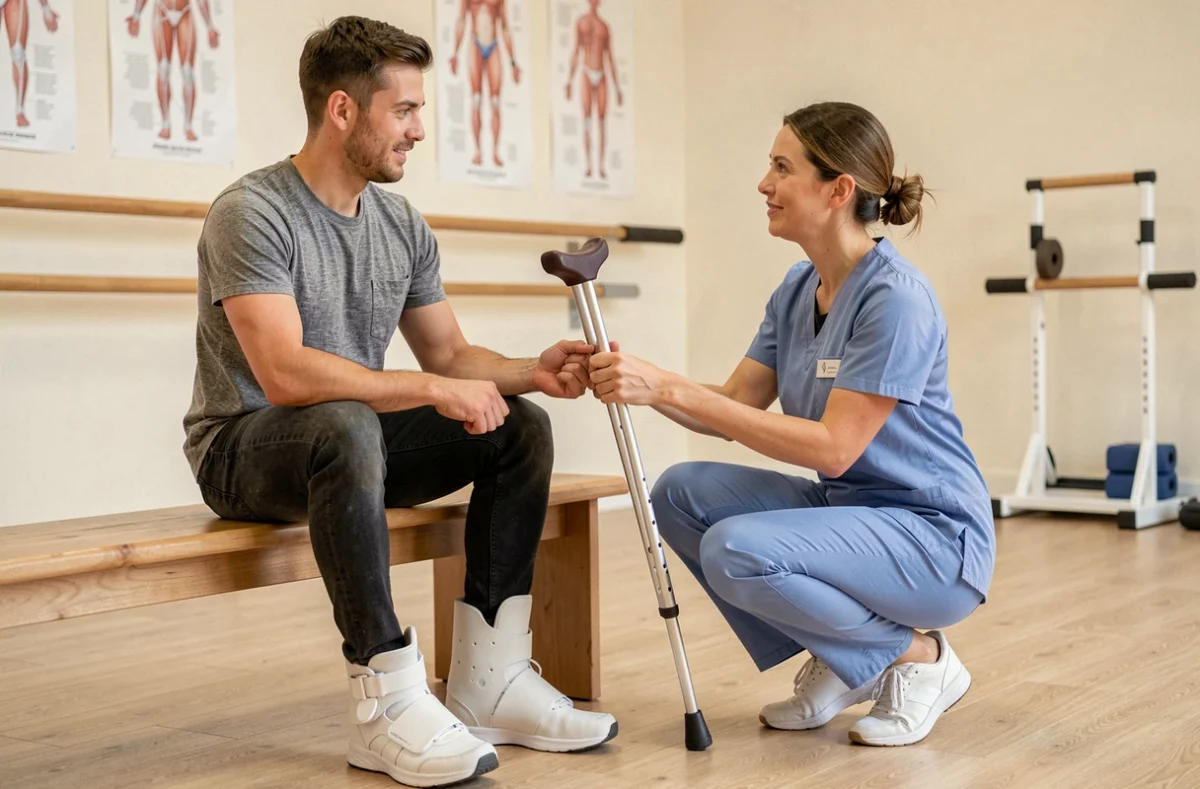
Axillary crutches, which fit under the armpits, are often prescribed for temporary use after an acute injury. They provide broad support but require less hand strength.
Forearm crutches are better suited to longer-term use. They require more strength in the hands and wrists, but keep pressure off the armpits and allow for smoother movement.
The choice between the two depends on muscle strength, coordination, balance and expected duration of use. An older person with a weak grip will not benefit from forearm crutches in the same way as a young patient recovering from surgery. This choice should be made with a healthcare professional, not by buying crutches at a pharmacy without first seeking advice.
The tips, quality of the handgrips and weight of the crutches also affect everyday comfort. A device suited to the individual reduces fatigue and postural compensation, which can cause secondary back or shoulder pain.