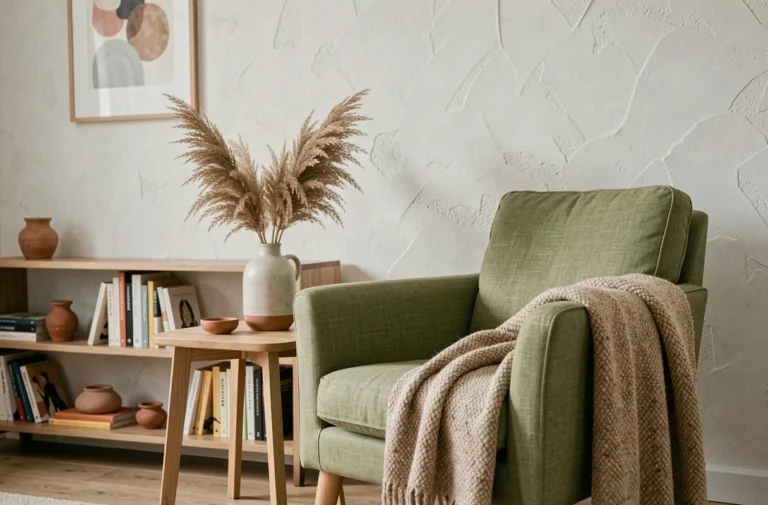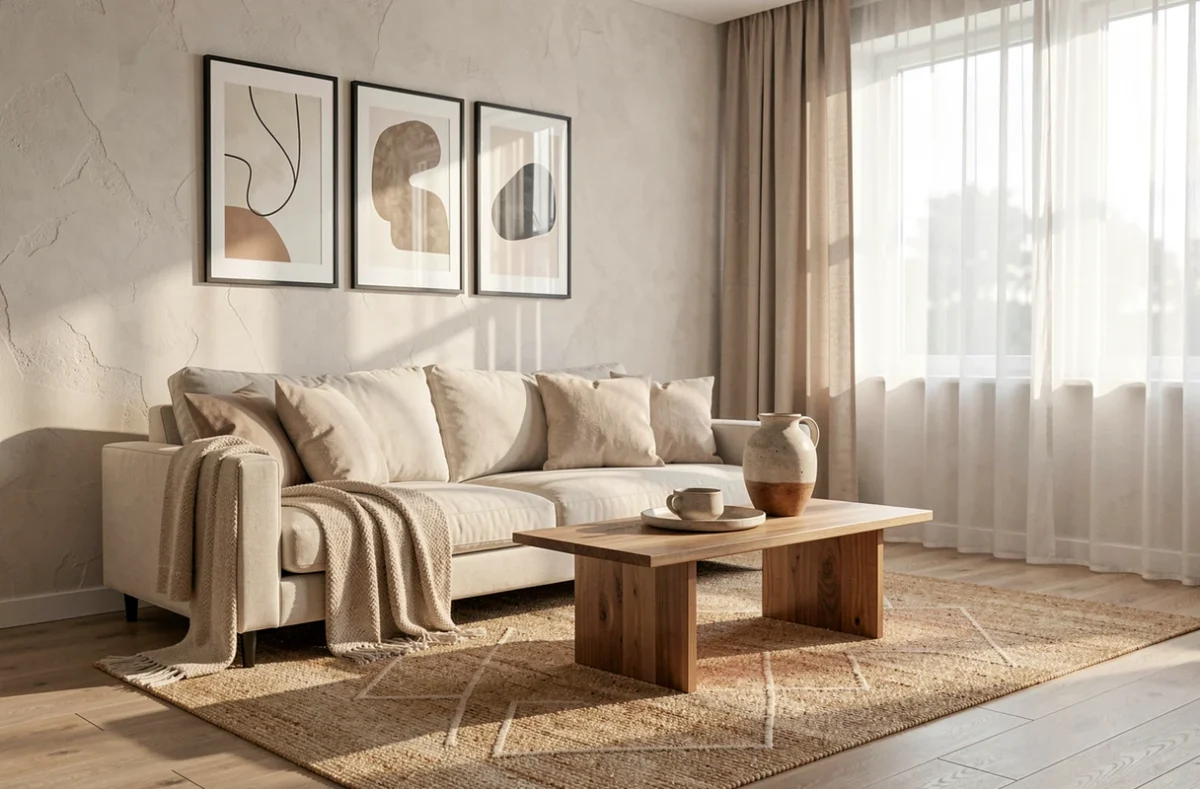
Sculptural furniture has replaced decorative accumulation as a marker of elegance. A console made of raw travertine or an armchair with organic curves is enough to structure a living room without resorting to any wall accessories. We have been observing this shift for several seasons: the piece of furniture becomes the focal point, and the rest of the decor intentionally fades away to give it visual space.
Sculptural furniture and mineral materials: the new decorative base
Sculptural volumes and pure geometries dictate the grammar of high-end furniture. Textured stone tables, monobloc seating in tinted resin, asymmetrical consoles: each piece of furniture claims a status as an autonomous object. This approach changes the logic of arrangement. We no longer furnish a room; we install one or two strong pieces around which the emptiness works.
In terms of materials, raw travertine and unpolished stones dominate table tops and lamp bases. Combined with heavy textiles like thick linen or recycled hemp, they create a tactile contrast that replaces the layering of small decorative objects. We recommend limiting shiny finishes in this context: matte and raw enhance each other.
A common mistake is to multiply sculptural pieces in the same space. Two strong organic shapes in a standard-sized living room compete visually. It is better to concentrate the investment on a single signature piece and treat the rest with simple lines.
Emotional personalization of the interior: beyond catalog style
The most structuring trend of recent seasons is not about a color or a material, but about a method. Interior designers speak of exacerbated personalization centered on personal memories: inherited objects, collections built over travels, photographs framed in unusual formats. The interior no longer reproduces an identified style; it tells a unique story.
Concretely, this translates into choices that catalogs do not offer. A coffee table top made of reclaimed cement tiles from a renovation, a light fixture made from a repurposed object, a shelf that only displays pieces loaded with meaning. Coherence no longer comes from the color palette but from the narrative thread that connects each element to the inhabitant’s experiences.
Resources like miragedinterieur.fr help identify furniture pieces and accessories that break away from standardized circuits, a useful starting point to anchor this personalization approach in concrete choices.
Earthy colors and dark matte woods: the palette that structures a room
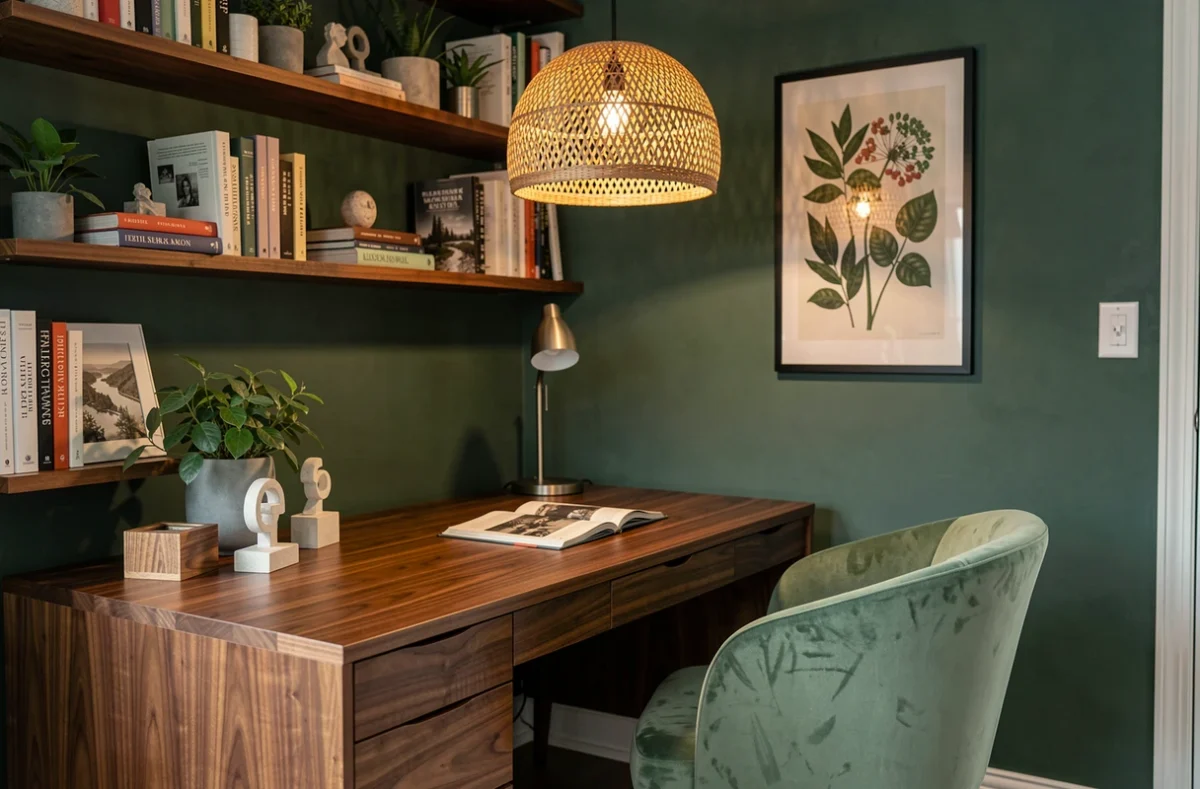
Earthy tones and dark woods with a matte finish have emerged as a sustainable alternative to the ubiquitous off-whites. This palette operates on a simple principle: the wall becomes an active background that sculpts light instead of merely reflecting it.
Three axes to master for success with this palette:
- Work with blocks of color rather than a single wall panel. A clay-colored baseboard under a lighter wall creates depth without darkening the entire room.
- Pair dark matte woods (oiled walnut, smoked oak) with light textiles to avoid a cave-like effect. The value contrast remains key to spatial readability.
- Reserve satin finishes for small objects (vases, handles) to introduce points of light without breaking the muted atmosphere.
The most common pitfall with this palette is neglecting lighting. An interior in earthy tones with a single cold white ceiling light appears dull. We recommend multiple warm temperature light sources positioned at varying heights.
Bedroom decoration and intimate spaces: noble textiles and sobriety
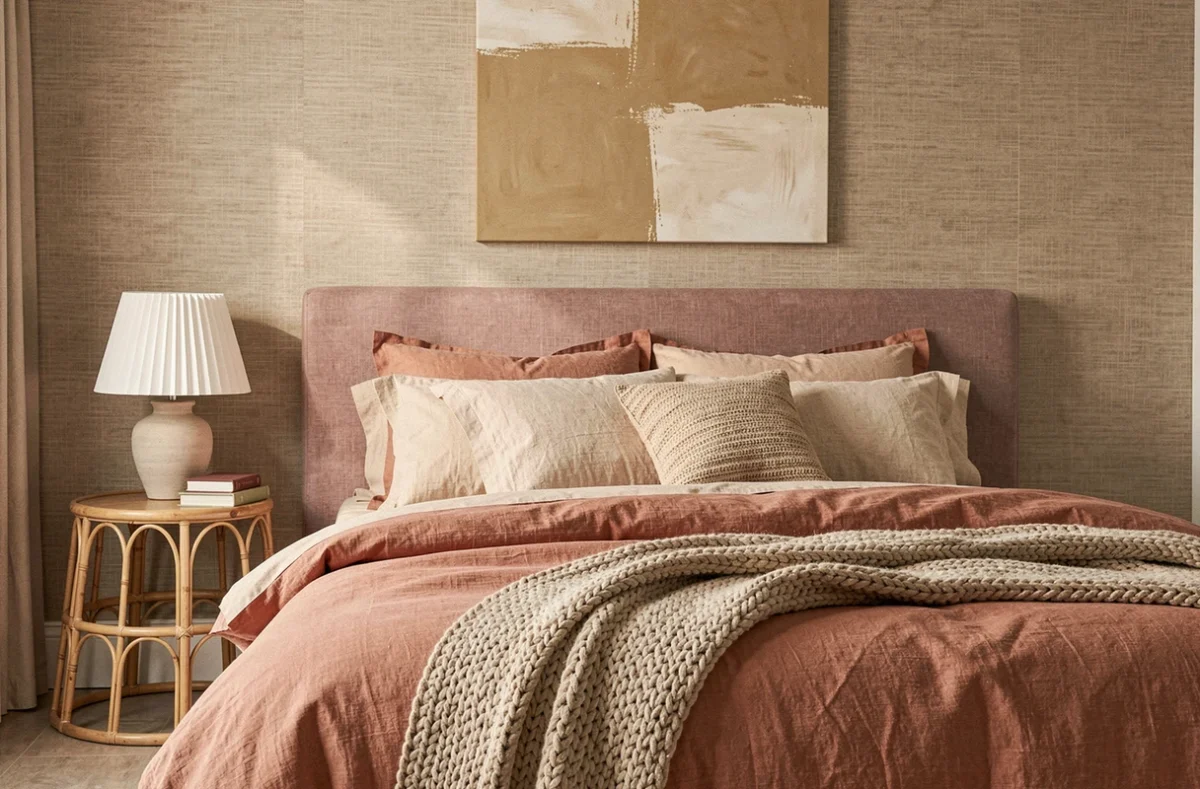
The bedroom is the space where the sculptural trend applies the least. The challenge here is tactile before it is visual. The materials to prioritize are washable linen, recycled hemp, and dense-weight wools, layered successively on the bed and seating.
Sobriety in a bedroom does not mean a lack of character. An accent wall in textured plaster (brushed lime, light tadelakt) brings originality without resorting to figurative wallpaper. Paired with a headboard in raw wood or fabric stretched over a frame, it gives the room a strong identity with a minimum of elements.
Decorative accessories are limited to two or three objects placed on a flat surface: a stoneware vase, a patinated brass candlestick, a book. Any accumulation beyond this threshold dilutes the desired effect. Three well-chosen objects make a stronger statement than a cluttered shelf.
Coherence of atmospheres between rooms: the often absent common thread
Enhancing an interior is not done room by room. A recurring flaw in amateur projects is treating each space as an autonomous universe: Scandinavian style in the living room, industrial vibe in the kitchen, bohemian decor in the bedroom. The result lacks fluidity.
An effective common thread relies on a recurring element: a consistent wood species across the joinery, a common background hue expressed in varying intensities, or a type of light fixture (brushed brass, ceramic) present in every room. This discreet binding unifies the whole without imposing a monolithic style.
- Choose a common material (wood, metal, stone) that spans at least three rooms.
- Vary the intensities within the same color family rather than changing palettes at every door threshold.
- Maintain a dominant finish type (matte or satin) on wall surfaces to ensure a consistent reading of light.
Interior decoration gains elegance when it abandons the showcase logic in favor of a coherent narrative. A successful interior is recognized by what has been removed, not by what has been added.