
The French used-car market sees several million transactions every year. The most common approach is to sort listings by ascending price, spot an attractive model and rush to buy it. This overlooks a crucial factor: the asking price represents only a fraction of what the vehicle will actually cost over two or three years of use.
Total cost of ownership for a used car: what the asking price doesn’t show
The purchase price grabs your attention. The expenses that follow often weigh more heavily. Total cost of ownership includes repairs, insurance, energy and routine maintenance, and it determines whether you’re getting a good deal.
A vehicle listed at a low price but fitted with an engine known for timing or turbo problems can generate repair bills that exceed the price difference compared with a more expensive model. On a high-mileage diesel, replacing the timing belt kit, dual-mass flywheel and clogged particulate filter can add up to a substantial sum.
To estimate the true cost, several platforms let you compare listings and access market price histories, including https://www.caraffaires.com, which features a wide catalogue of used vehicles.
Insurance is another variable cost. A powerful or frequently stolen model (some popular city cars regularly appear in theft statistics) can carry a significantly higher annual premium. Getting an insurance quote before signing the purchase agreement helps avoid unpleasant surprises.

Special case: used electric cars
A used electric car should be assessed on more than its asking price. Battery health, access to charging and real-world range determine its economic appeal. A battery health certificate (SOH) can help inform your decision, but it does not replace checking the vehicle’s history or assessing how you plan to use it.
A buyer who drives short distances in an urban area and has a home charger can quickly recoup the cost of a used electric car thanks to its low energy costs. A rural driver covering long distances without nearby charging infrastructure will face practical constraints that cancel out the price advantage.
HistoVec and roadworthiness tests: what these documents reveal—and what they don’t
Two documents come up time and again in used-car buying advice: the HistoVec report and the roadworthiness test report. They are genuinely useful, but their limitations are often misunderstood.
HistoVec can flag mileage discrepancies and certain accident claims, but it does not document maintenance or the vehicle’s current mechanical condition. The history of an imported car may also be incomplete. You should therefore cross-check it against maintenance invoices, original documents and a physical inspection of the vehicle.
The roadworthiness test, meanwhile, checks specific regulatory requirements. A pass is not a mechanical diagnosis. Expensive components such as the clutch, gearbox and air conditioning are not among the items inspected. Asking for previous test reports can help you track the vehicle’s condition over time and spot recurring defects.
Safety recalls: a separate check you shouldn’t forget
Manufacturer recalls can be checked using the VIN, independently of HistoVec and the roadworthiness test. Several manufacturers offer a dedicated online tool. An outstanding recall may involve a defective airbag, a steering problem or a fire risk—all serious defects that won’t be apparent during a test drive.
Reliability by make and model: beyond generic rankings
Annual reliability rankings published by automotive magazines are based on surveys or workshop data. They provide a useful overview, but group very different engines and model years under the same brand name.
A Peugeot model with a naturally aspirated petrol engine and the same model with a diesel engine and automatic gearbox do not have the same breakdown profile at all. Assessing reliability by engine and model year is more useful than judging by the badge on the bonnet.
- Small-displacement naturally aspirated petrol engines (Toyota, Honda, Suzuki) are among the most durable, with low routine maintenance costs.
- After a certain mileage, common-rail direct-injection diesel engines may need new injectors or EGR valves, with repair costs that can exceed the vehicle’s residual value.
- Single-clutch automated manual gearboxes (common in some generations of Renault and Volkswagen models) require workshop visits more often than manual gearboxes or torque-converter automatics.
Checking model- and engine-specific forums gives you a more accurate picture than any make-by-make ranking.
Independent pre-purchase inspection: an investment that shifts the balance of power
Having the vehicle inspected by an independent professional before negotiating is still one of the most underused steps among private buyers. An independent inspection costs a fraction of an unexpected repair and strengthens your negotiating position.
The inspector checks components that are not covered by either the roadworthiness test or HistoVec:
- The condition of the transmission, suspension bushes and ball joints, which can reveal how the vehicle has actually been used.
- Signs of bodywork repairs (areas of unusually thick paint), which may indicate an undeclared collision.
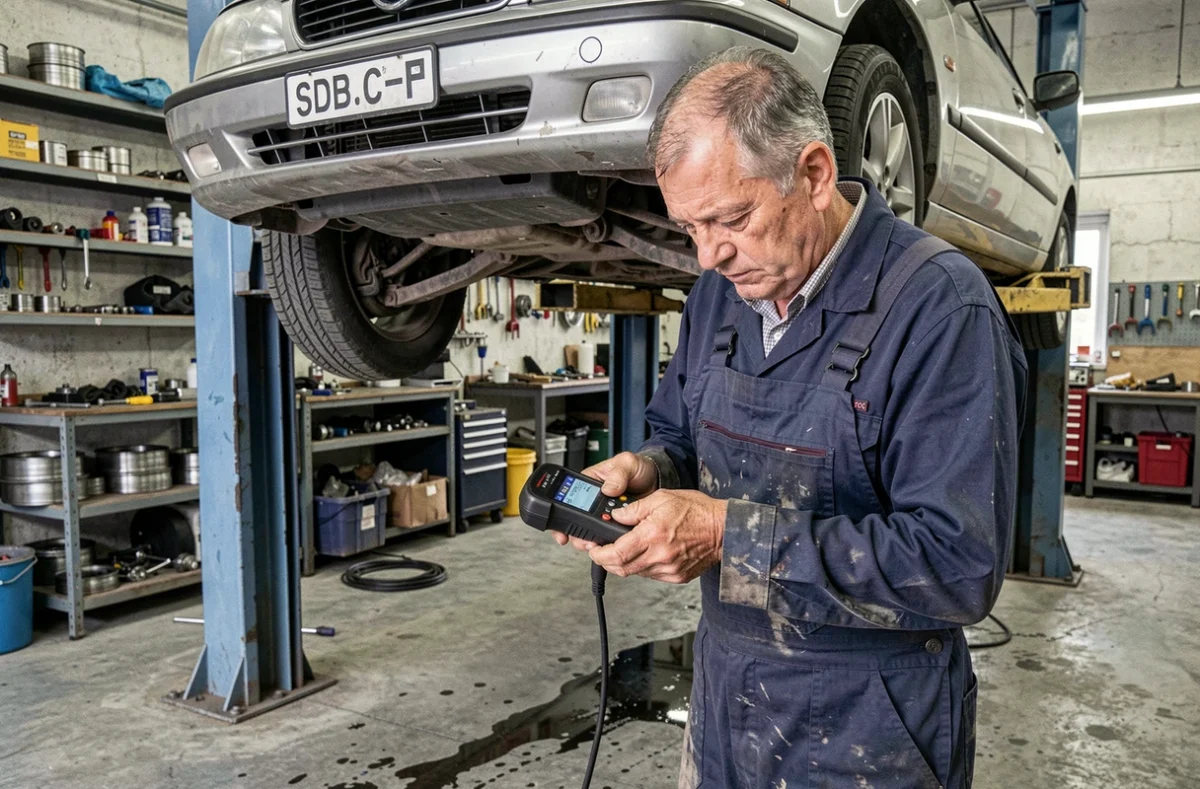
- How the onboard electronics are working (reading fault codes with a diagnostic tool), which can be particularly revealing on newer vehicles.
A negative inspection report is grounds to renegotiate or walk away without hesitation. A positive report confirms that the asking price reflects the vehicle’s actual condition, giving both parties greater confidence in the purchase.
Choosing a reliable used car is less about hunting for the lowest price and more about assessing what the vehicle will really cost after purchase. Cross-checking HistoVec, roadworthiness test reports and manufacturer recall information, and arranging an independent inspection, can significantly reduce the risk of a bad deal. The price shown in the listing is only the first figure in a much longer bill.