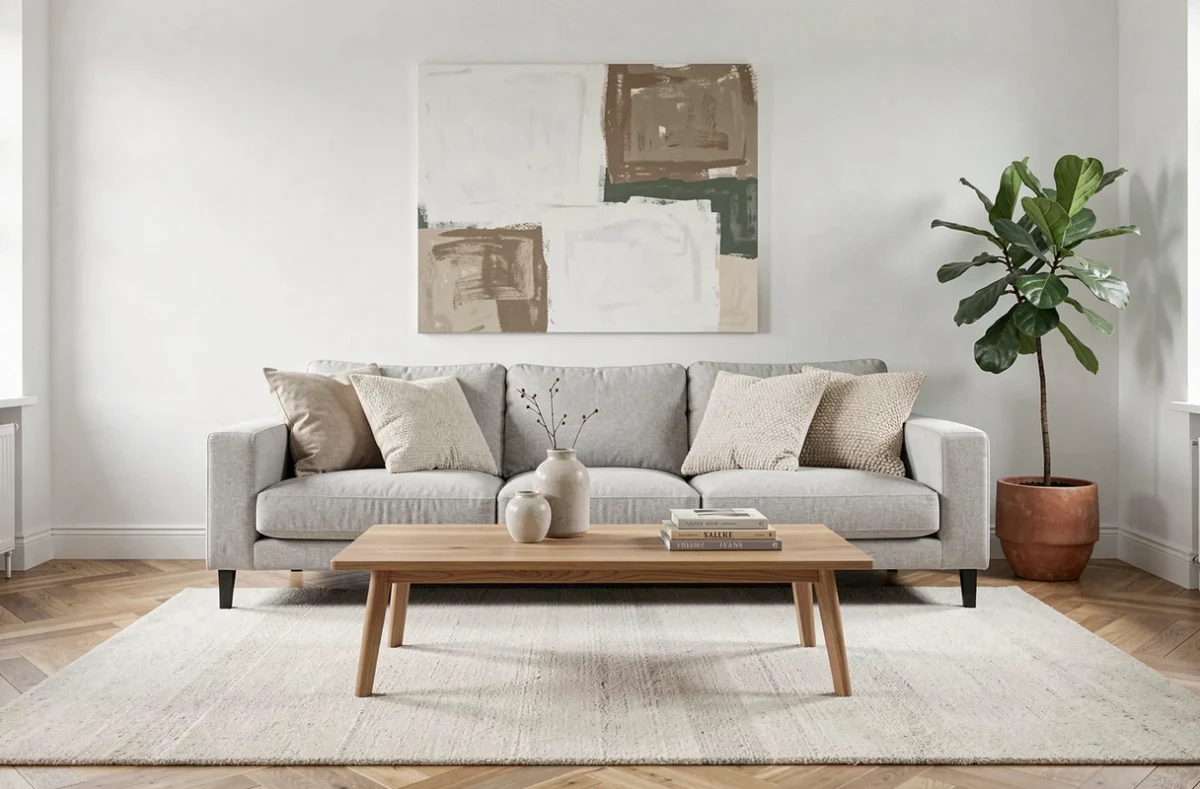
Furnishing a house is not just about stacking furniture and repainting the walls. It’s about organizing a space so that it functions daily, and then giving it a coherent visual identity. The choices of colors, furniture, and lighting interact with each other, and a single poor decision can upset the whole balance. Here’s how to approach each decorating decision methodically, without sacrificing the pleasure of creating an interior that reflects you.
Ventilation and insulation: two technical choices that change the decoration
Have you ever noticed that some rooms feel stuffy despite a recent renovation? This is often related to a design oversight. Strengthening insulation without planning for air renewal can promote confinement, humidity, and degradation of indoor air quality.
Before choosing a wall covering or window type, consider the room’s exposure and the inertia of the materials. Insulation, heating, and ventilation should be considered together, not separately. A house that is better insulated in winter is not automatically pleasant in summer: heat can become trapped if the design ignores these parameters.
This point has direct consequences on decoration. The choice between outdoor blinds and blackout curtains, the type of glazing, and the color of the walls (dark shades absorb more heat) become both aesthetic and technical decisions. Decorative elements like light drapes or wooden sunshades also serve a thermal regulation function, giving them dual utility.
Several resources can help you find ideas that combine performance and style. Catalogs like the website www Ker Expo offer inspiration for every room while taking these practical constraints into account.

Color palette for a coherent interior: a method in three shades
The most common trap is choosing colors room by room, without a global vision. The result: the living room no longer visually communicates with the entrance, and the transition between spaces feels artificial.
Start with a base of a maximum of three colors for the entire house. A dominant shade (walls, floors), a secondary shade (main furniture, curtains), and an accent shade (cushions, objects, frames). The dominant occupies the majority of the visible surface, the secondary provides contrast, and the accent creates points of interest.
Adapting the palette room by room without breaking harmony
The kitchen can handle brighter accents than the bedroom, but the dominant remains the same. A colored accent wall in the living room does not destabilize the whole if the rest of the room respects the base shade.
For the bedroom, favor shades that are a step back from your palette. If your dominant is a warm beige, the bedroom benefits from a lighter version of that beige, without introducing a new color family. Coherence lies in continuity between rooms, not in uniformity.
Furniture arrangement: organizing circulation before decoration
A common mistake is to place the sofa facing the television, then fill the remaining spaces with accent furniture. The reverse approach works better: start by mentally mapping out the circulation paths in the room.
- Leave a passage of at least one outstretched arm between the sofa and the coffee table, and between the coffee table and the TV unit, so that circulation remains fluid even when someone is seated
- In an open kitchen, the countertop should not force you to navigate around an island to access the living room, as this daily detour can become annoying
- In the bedroom, plan for free access on both sides of the bed if space allows, which simplifies daily life and avoids pushing the bed against a wall by default
Adapt the volume of the furniture to the actual area. A large corner sofa in a modest-sized living room visually overwhelms the space. Conversely, a small two-seater sofa in a large living room gives an impression of unfinished emptiness.
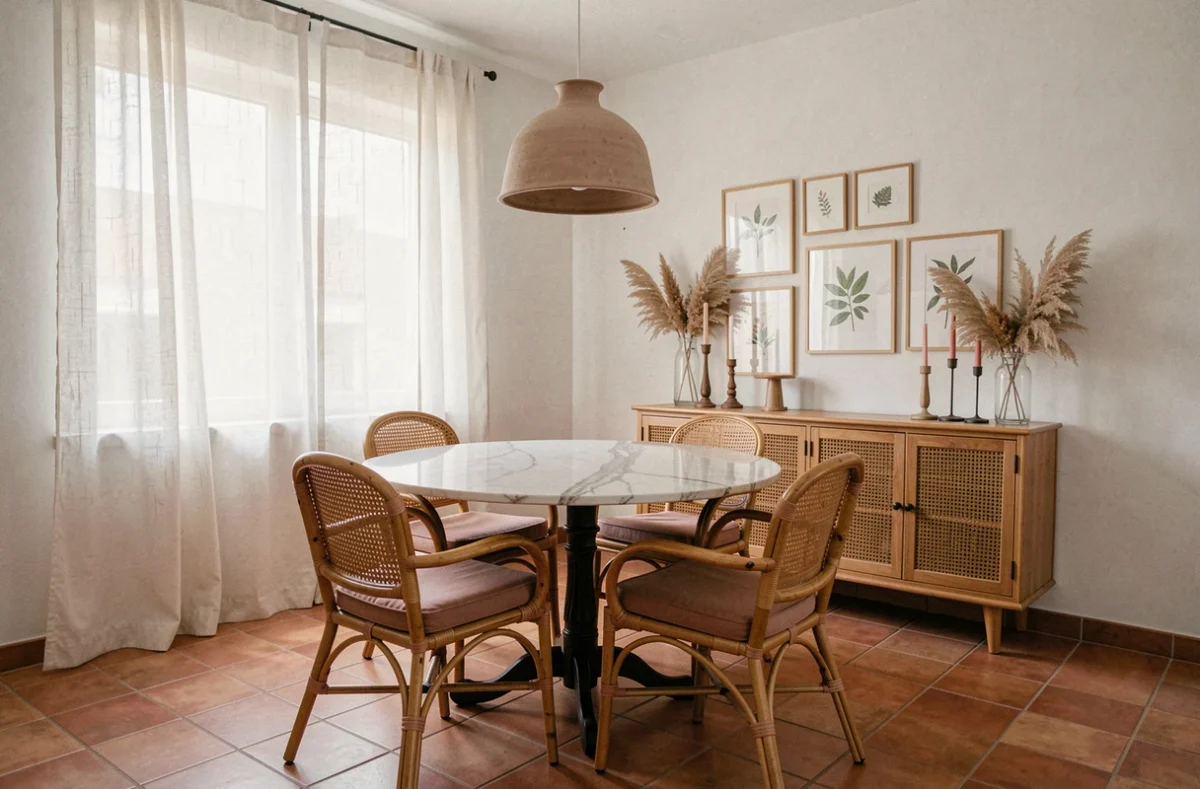
The case of the open living-dining room
When the living space combines a living room and dining room, the furniture serves as a visual separator. A rug under the coffee table delineates the living area. The dining table, placed closer to the kitchen, creates a natural boundary without a partition.
This invisible division structures the room without closing it off. A well-sized rug can replace a partition in an open space, provided it is large enough to accommodate the front legs of the sofa.
Decorative lighting: layering light sources
A central ceiling light is not enough to create an ambiance. A single direct light flattens volumes and casts harsh shadows. For a pleasant interior, layer at least three types of light sources.
- A general lighting (ceiling light or pendant) that ensures basic visibility in the room
- An ambient lighting (table lamps, garlands, LED candles) that softens the atmosphere in the evening
- A functional lighting (reading lamp near the sofa, spotlight above the countertop) that supports specific activities
Varying light heights changes the perception of a space. A floor lamp placed against a wall creates a sense of depth. A low pendant above the dining table visually narrows the dining area and makes it more intimate.
Why choose multiple sources? Because each moment of the day requires different lighting. In the morning, you need bright clarity. In the evening, dimmed light better accompanies relaxation. A dimmer on the main ceiling light is a modest investment that transforms the use of a room.
Second life of furniture: a reflex to integrate from the purchase
In France, the extended producer responsibility (EPR) system for furniture now covers the entire life cycle of furniture. In practical terms, this means that the end of life of a sofa or wardrobe is governed by a collection and reuse system.
Planning for the second life of a piece of furniture from the outset changes the way you buy. A solid wood piece can be repaired, sanded, and repainted. A piece made of laminated particle board rarely supports a second use. This durability criterion directly influences the long-term aesthetics of your interior, as a piece that ages well remains decorative longer.
Choosing repairable furniture does not mean sacrificing style. Metal legs can be replaced, chair seats can be reupholstered, and dresser fronts can be personalized with new veneer. Decorating with style also means anticipating how each piece of furniture will evolve over time.