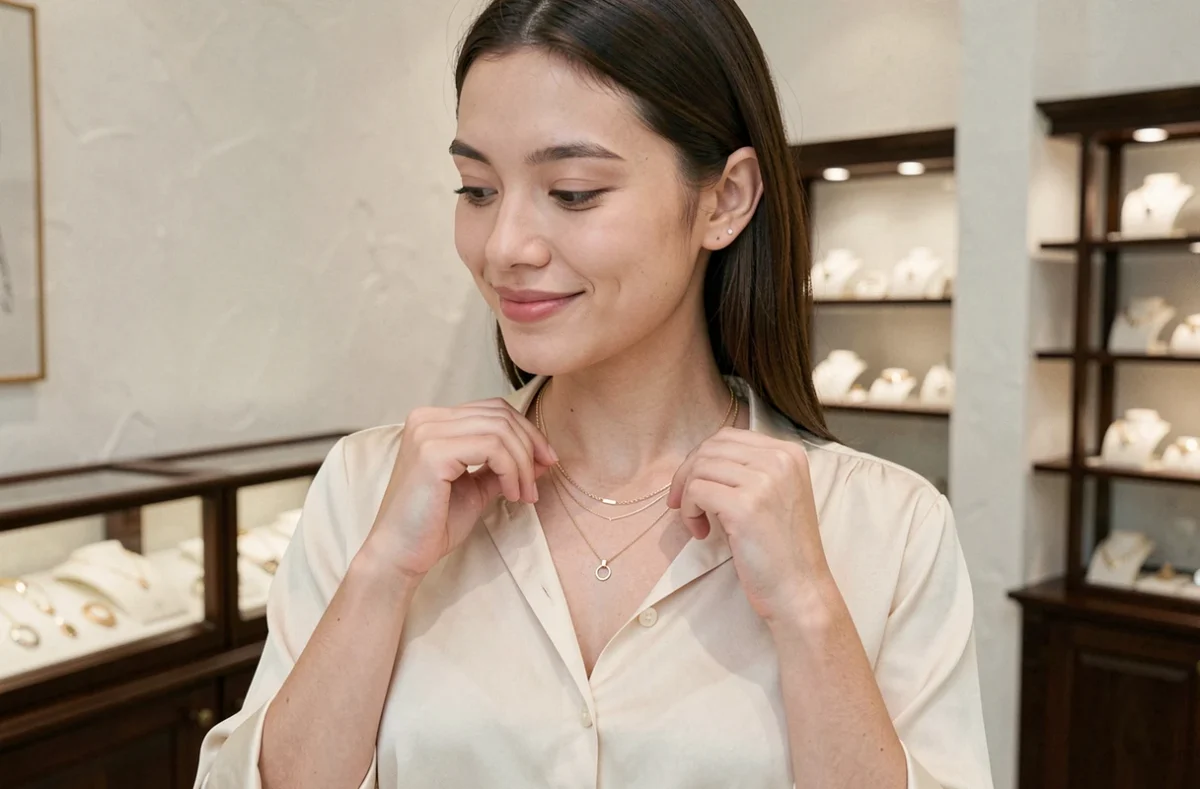
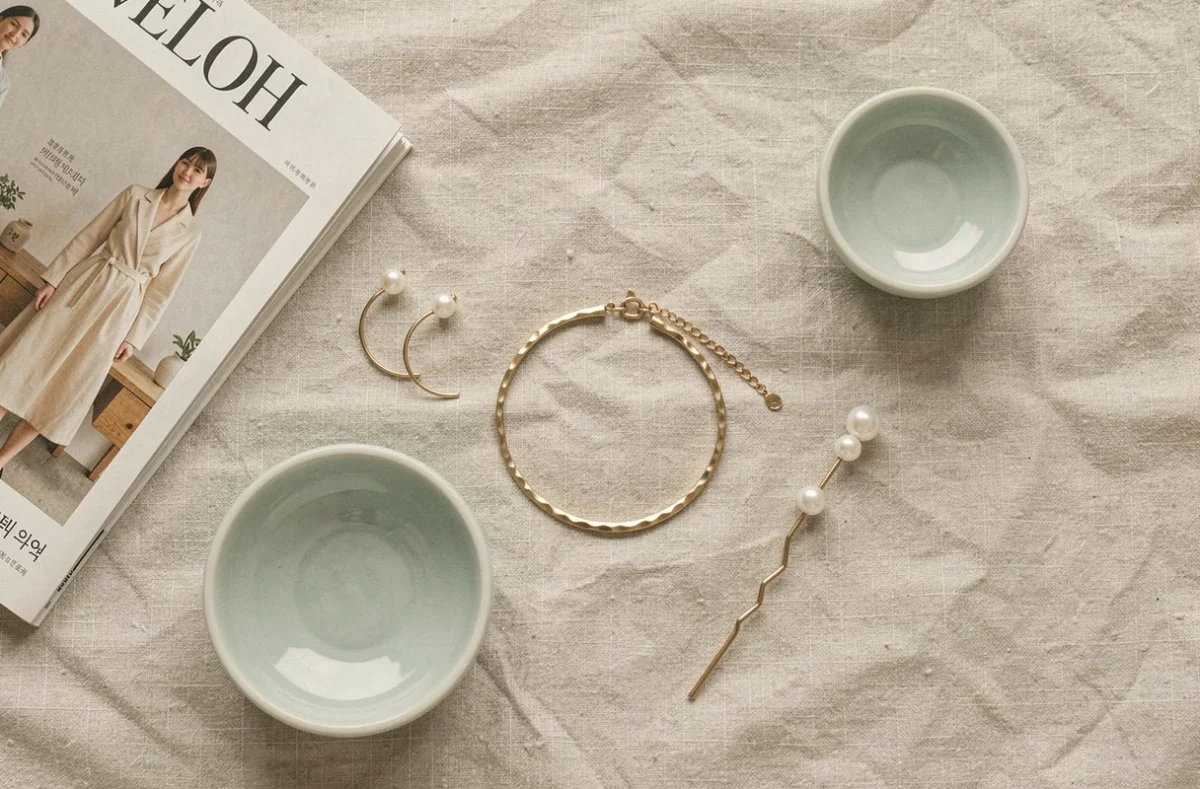
Asymmetrical earrings, stacked thin rings, discreet pendant necklaces: these pieces that fill European Instagram feeds often share a common point. They come from South Korean brands or are directly inspired by them. The phenomenon goes beyond mere curiosity for K-pop. It is based on precise aesthetic choices, an accessible pricing logic, and, more recently, a capacity to meet the regulatory requirements of the European market.
European Regulation and Korean Jewelry: A Filter That Few Brands Pass
Before discussing style, we must talk about chemistry. Jewelry sold in the European Union must comply with REACH restrictions on nickel, lead, and cadmium. Nickel, in particular, can hide in soldering, plating layers, or steel clasps, even when the jewelry is presented as gold or silver.
Since the implementation of European regulation 2023/988 on general product safety, obligations have increased. Technical documentation, product identification, and the presence of a responsible operator in the Union: an appealing design is no longer enough to sell in Europe. Coatings must maintain their protection after wear simulation, which implies rigorous laboratory testing.
This framework effectively eliminates many poorly structured sellers. Korean brands capable of providing compliance certificates and complete traceability find themselves at an advantage. For European buyers, this compliance becomes a signal of quality, even if they are not always aware of the technical details. You can find a selection of trendy jewelry on Bijoux Aurea that illustrates this trend structured around reliability.
Korean Minimalist Aesthetic: Why This Style Resonates with European Women
Have you ever noticed that Korean jewelry is often recognizable at first glance? Their signature can be summed up in three words: delicacy, asymmetry, discretion. While classic European jewelry focuses on a central stone and symmetry, Korean design prefers organic shapes, clean lines, and combinations of matte and shiny textures.
This minimalism is not by chance. It stems from a clothing culture where the accessory complements the outfit without dominating it. A thin silver ring can be worn daily with jeans or a dress. A delicate chain bracelet can be stacked with others without creating visual overload.
This approach aligns with an underlying trend in Europe: a return to versatile accessories that can be worn in any season. Fashionistas investing in Korean pieces are not looking for a spectacular piece for an evening out. They want style elements that work seven days a week.
The Role of Materials in Visual Impact
Korean designers extensively work with surgical steel, vermeil, and gold-plated silver. These materials allow for very clean finishes at a contained price. The relationship between perceived quality and actual price often surprises new customers.
The choice of surgical steel, in particular, also addresses a practical issue: it limits allergic reactions to nickel, a common problem with traditional costume jewelry.
K-pop, Dramas, and Social Media: The Driving Force Behind Distribution to Europe
The Hallyu (the Korean cultural wave) is not limited to music and series. It carries with it a complete aesthetic universe, from clothing to makeup, including accessories. Korean dramas, widely broadcast on streaming platforms in Europe, feature characters whose every detail of clothing is carefully considered.
Jewelry worn on screen quickly becomes identifiable objects of desire. Fans spot a ring or necklace in an episode, search for it online, and place an order before the end of the season. This cycle, accelerated by social media, creates a demand that Korean brands have learned to satisfy very quickly.
- K-pop groups like BTS have transformed certain rings into mainstream fashion accessories, surpassing the simple fan object to become full-fledged style pieces.
- Drama actresses popularize specific trends (mismatched earrings, layered necklaces) that appear in European collections the following season.
- Korean influencers on Instagram and TikTok show how to combine multiple fine pieces, a layering skill that appeals to a European audience used to wearing just one piece of jewelry at a time.
A Distribution Circuit Adapted to the Digital World
Korean brands understood early on the value of direct online commerce. Many sell without intermediaries, with websites translated into English and French, competitive shipping rates to Europe, and carefully crafted packaging that enhances the shopping experience.
This model reduces costs and allows for lower prices than comparable European brands in terms of design. The average price of Korean jewelry remains significantly lower than that of a European designer piece, without compromising perceived quality.
Korean Jewelry and the European Wardrobe: Combinations That Work
Adopting Korean jewelry does not require rethinking your entire style. The strength of these pieces lies precisely in their ability to integrate. Some combinations have proven effective:
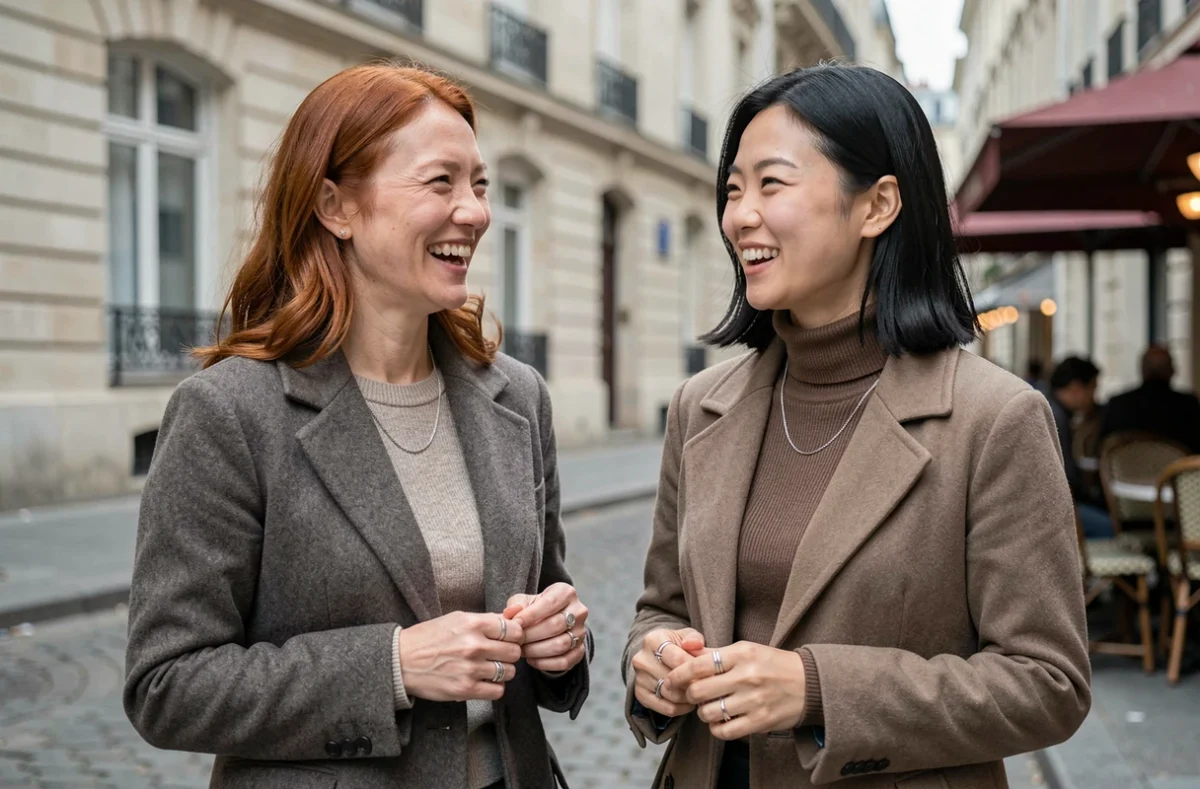
- A set of thin rings (two to four) worn on one hand, paired with an oversized blazer: the contrast between the structure of the garment and the delicacy of the rings creates an effective visual balance.
- Asymmetrical earrings with a solid turtleneck: the jewelry becomes the focal point of the face without competing with the outfit.
- A short chain necklace layered with a longer pendant over a simple white t-shirt: the layering of necklaces transforms a basic outfit into a polished look.
The central idea is one of modularity. Korean jewelry is designed to be combined with each other and with pieces from other origins. This flexibility explains why they integrate so well into European wardrobes, where neutral colors and simple cuts dominate.
The success of Korean jewelry in Europe is not based on a fleeting fashion effect linked to a musical group or a series. It is rooted in a convergence of precise aesthetic craftsmanship, consistent pricing, and regulatory compliance that reassures. Brands that master these three dimensions will continue to gain ground, season after season.