When repainting a child’s room or an office located on the west side, the classic reflex is to choose pure white or steel gray because the west is associated with the Metal element in Feng Shui. In practice, this shortcut often results in cold and unwelcoming rooms, especially in areas where the late afternoon light is already very orange.
The west sector deserves a more nuanced approach, grounded in the Dui trigram and the practical use of the room in question.
This Dui trigram connects the west to joy, creativity, and children. To harness this energy, one works with metallic shades tempered by earthy tones, taking into account natural light and the function of each space. The following guide details how to proceed room by room, based on the productive cycle of the five elements.
Dui Trigram and Metal Element: What the West Really Requires
Many Feng Shui guides simply say “Metal = white and gray.” This misses the essential point. The Dui trigram carries an energy of personal expression. An entirely anthracite gray creative office does not encourage imagination or good mood.
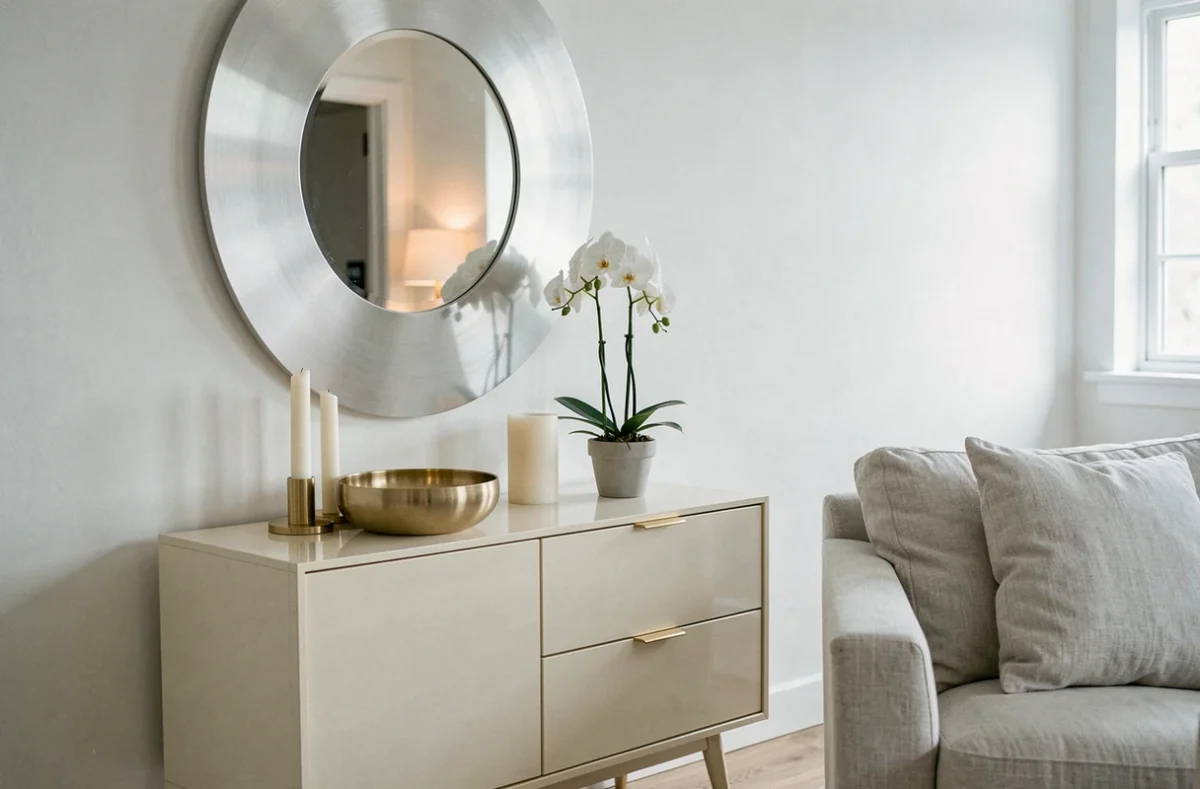
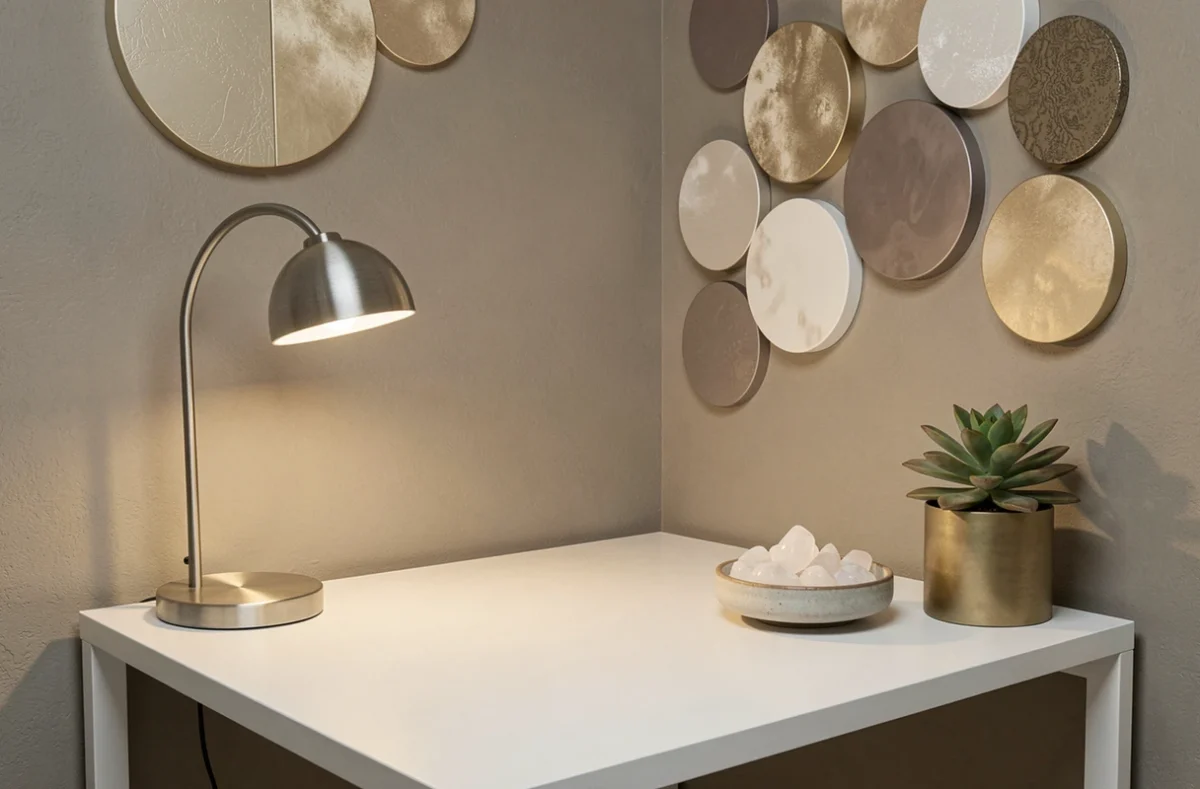
In practice, off-white, cream, and pearl gray work as a base. These shades reflect the low afternoon light without saturating it. They are complemented by materials: a silver photo frame, a brushed brass lamp, a mirror with a metallic border. Round and oval shapes enhance the Metal theme better than an entirely painted wall.
To explore the colors to favor in the west according to each room configuration, one can cross the cardinal orientation with the type of activity taking place there.
Feng Shui West Colors: The Role of Earthy Tones in the Productive Cycle
In the cycle of the five elements, Earth nourishes Metal. Practically, this means that earthy shades support and enhance the energy of the west sector instead of contradicting it. This is an underutilized lever.
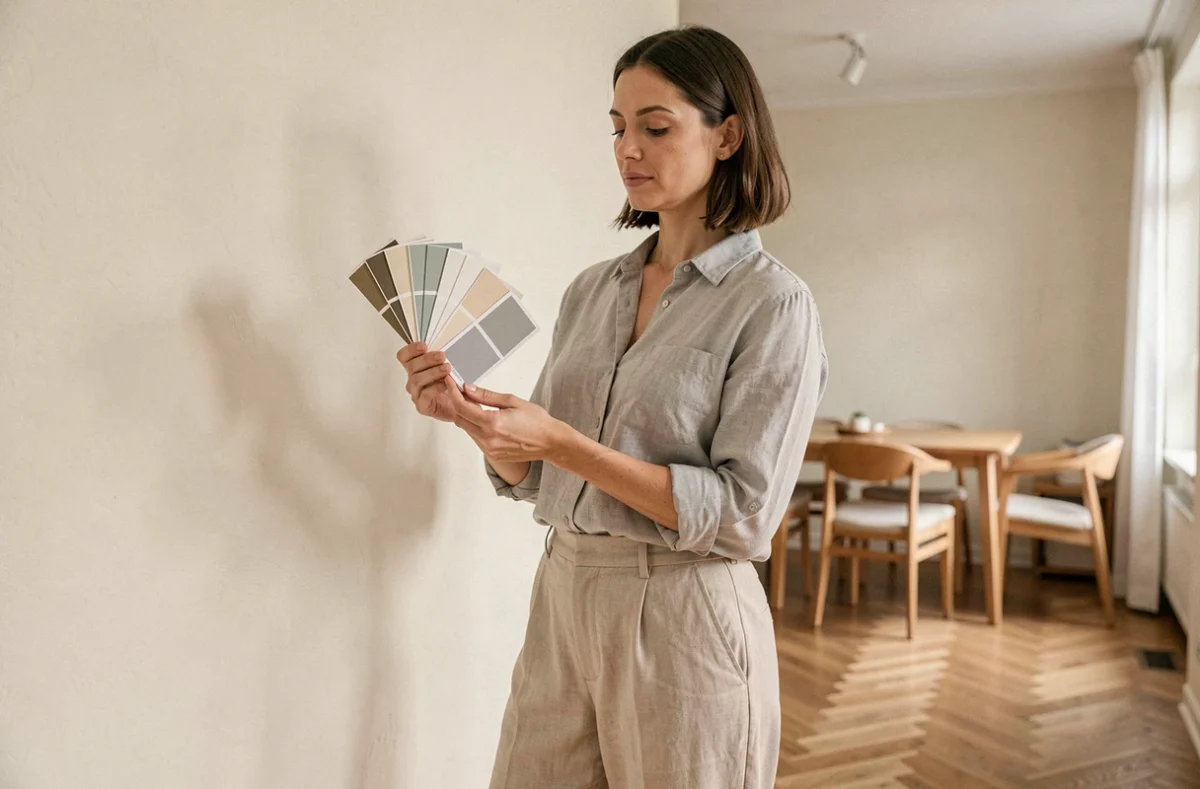
Here are the most suitable supporting colors:
- Sand beige, ideal for a west-facing living room that receives a lot of light in the late afternoon, as it absorbs excess orange without darkening the room.
- Taupe, which adds depth to an accent wall in a west-facing bedroom or hallway.
- Soft yellow (like straw or light honey), particularly effective in a play area or child’s room, as it stimulates creativity associated with the Dui trigram.
An earthy wall combined with metallic accessories creates a more vibrant Earth-Metal balance than a 100% white palette. This results in a warm room that remains aligned with Feng Shui principles.
Red and Fire in the West: Where the True Limit Lies
Red represents the Fire element, and Fire melts Metal in the control cycle. Hence the recurring warning against red in the west zone. In practice, feedback varies on this point: a red cushion or a small orange decorative item does not destabilize an entire room.
The issue arises from the dominant use of red: an entire wall, very warm lighting leaning towards red-orange, or an accumulation of textiles in this range. This saturation creates tension between Fire and Metal that can result in a restless atmosphere, not conducive to rest or concentration.
In contrast, a punctuated accent (a vase, a canvas, a throw) remains compatible with the harmony of the sector. The practical rule: if red catches the eye first when entering the room, there is too much of it.
Adapting the West Palette According to the Room: Bedroom, Living Room, and Workspace
Orientation alone is not enough. A bedroom and a living room both located to the west do not require the same treatment.
West Bedroom and Yin Energy
The bedroom demands calm. Soft tones are favored: off-white on the walls, cream or light gray bedding. Matte materials absorb energy better than shiny surfaces, which promotes sleep. An object made of ceramic or stone placed on the nightstand serves as Earth support without visually cluttering.
West Living Room and Social Life
The living room tolerates more contrast. An accent wall in taupe or golden beige, paired with a pearl gray sofa, provides a solid Metal-Earth base. One can add bolder metallic touches (brass sconces, chrome-legged coffee table) because the Yang energy of the living room absorbs this stimulation.
Office or Creative Corner
This is the room where the Dui trigram makes the most sense. Straw yellow on one wall, combined with a light wood desk and metallic storage, creates an environment that supports concentration without rigidifying it. Avoid all-white, which in a workspace eventually strains the eyes.
Shapes and Materials: Complementing Color with Texture
Color alone is not enough to properly activate the west sector. Shapes and materials act as a second lever, sometimes more coherent than yet another paint change.
- Round and oval shapes (mirrors, side tables, light fixtures): they embody Metal and soften the angles of a rectangular room.
- Real metal objects (copper, brass, brushed steel, silver): even small ones, they enhance the energy of the sector more effectively than a gray wall.
- Ceramics and natural stone: they provide Earth support without weighing down the decor. A stoneware vase or a marble tray is sufficient.
Combining a round metal shape with an earthy base encapsulates the Earth-Metal principle in a single object. A brass bowl placed on a weathered wood console, for example, checks both boxes without forcing the decor.
The choice of colors for the west sector is not limited to painting in white and adding gray. By starting from the Dui trigram, combining soft metallic tones with earthy shades, and calibrating the palette according to the actual use of the room, one achieves a space that is both harmonious and lively. The paint sets the direction, but it is the materials and shapes that anchor the energetic balance sustainably.