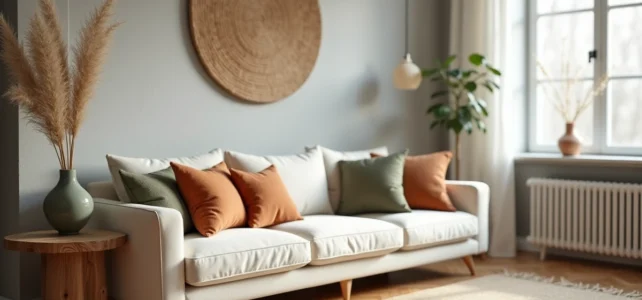
Choosing interior decoration involves making choices between materials, colors, and formats that do not all have the same visual impact or durability. With the rise of circular decor, the increasing regulation of materials by environmental labels, and the evolving palettes offered by manufacturers, options have multiplied. This article compares the concrete levers that truly transform an interior, based on documented trends from the past two years.
Wall Decoration Materials: Comparison of Common Options
The choice of wall covering or decorative element depends on three criteria that are rarely compared: ease of installation, long-term maintenance, and compliance with indoor air emission standards. Since 2023, VOC (volatile organic compounds) labeling for construction and decoration products has guided manufacturers towards less polluting formulations, reshuffling the deck between paint, wallpaper, and plaster.
| Wall Option | Installation | Maintenance | VOC Emission Label | Decorative Effect |
|---|---|---|---|---|
| Matte Paint | Quick, one to two coats | Washable depending on finish | A+ class widely available | Neutral background, highlights furniture |
| Non-woven Wallpaper | Medium (gluing wall) | Washable, durable | Variable by manufacturer | Patterns, textures, focal effect |
| Lime Plaster | Technical (multiple layers) | Very durable, self-cleaning | Naturally low in VOCs | Relief, artisanal look |
| Wood Panel (Wainscoting) | Mechanical fixing | Dusting, wood treatment | Recommended responsible wood label | Warmth, improved acoustics |
| Wall Art (frames, posters) | Immediate | Minimal | Not applicable | Strong personalization |
Lime plaster and labeled wood panels stand out for their low indoor emission levels, an increasingly decisive criterion in renovation projects. In contrast, wallpaper offers the widest palette of patterns to create an accent wall in a living room or common area.
To delve deeper into these choices and explore other avenues, it remains useful to discover decor with La Bonne Maison before embarking on a complete project.
Color and Ambiance: What Recent Palettes Change in a Living Room
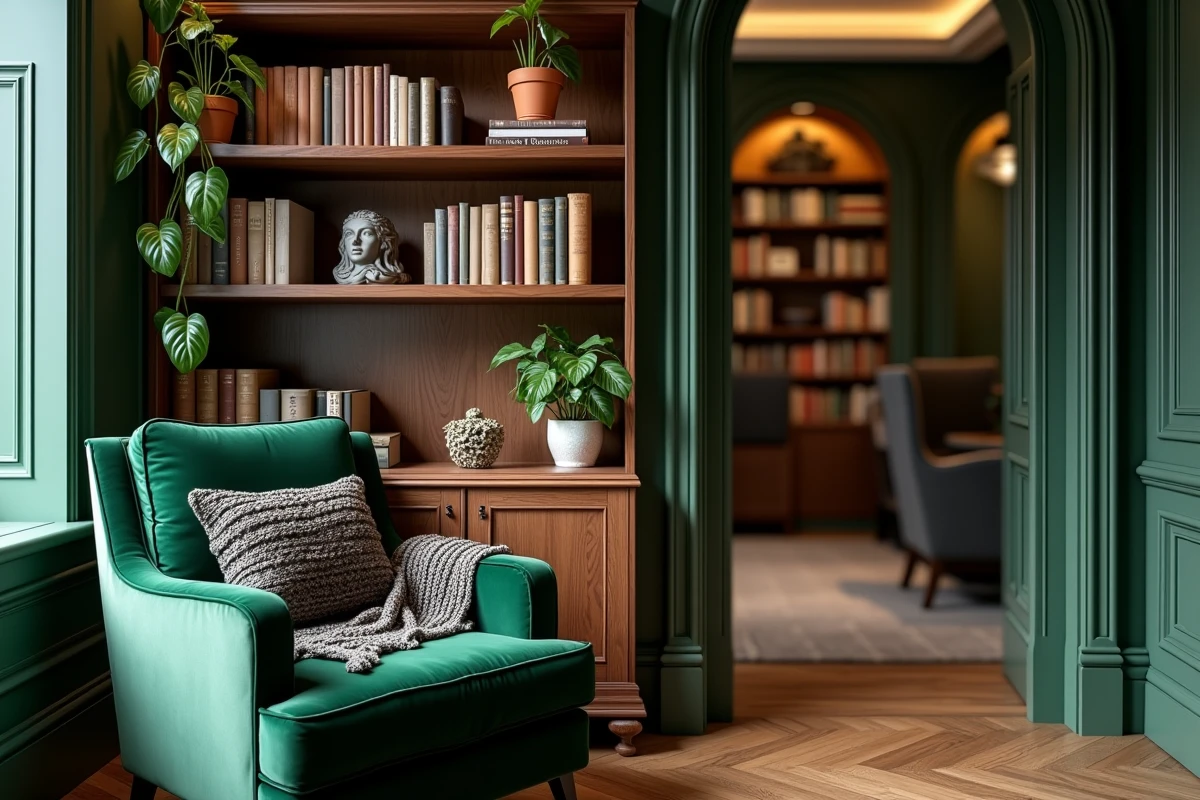
Paint and textile manufacturers have been steering their ranges towards earthy shades and muted tones for several seasons. This shift has a technical explanation: natural pigments generate fewer VOCs than some bright synthetic dyes, aligning aesthetic trends with regulatory constraints.
Warm vs. Cool Shades in the Same Space
Applying a warm color (terracotta, ochre, rosy brown) to a single wall in a living room painted in a cool shade (light gray, off-white, sage green) creates a contrast that structures the space without partitioning it. This technique works particularly well in open-plan areas connected to the kitchen, where color visually delineates zones.
Conversely, a living room entirely painted in a single neutral shade relies more on furniture and textiles to add relief. The risk: a space that appears monotonous if the accessories lack texture.
- An accent wall in a saturated shade works best on the shortest wall or one that features a focal point (fireplace, bookshelf, TV unit).
- Matte colors absorb light and visually reduce volume, while satin finishes reflect and enlarge.
- Pairing a curtain or cushion textile in the same color family as the accent wall enhances coherence without overwhelming.
Circular Decor and Upcycling: An Underestimated Lever for a Unique Interior
Second-hand decoration has surpassed the niche stage. Since 2024, major furniture retailers have integrated dedicated spaces for reuse (second life corners, collaborations with resale platforms). This movement responds to two simultaneous pressures: inflation on new materials and the growing demand for furniture and objects with history.
Upcycling (revamping existing furniture, repurposing objects) produces pieces that no one else possesses. A 1970s sideboard repainted with A+ rated emissions paint, equipped with new brass handles, costs significantly less than a new designer piece and brings a uniqueness that cannot be reproduced in series.
What Works in Decor Upcycling
Not all furniture lends itself to revamping. Solid wood structures (oak, beech, walnut) can withstand sanding and repainting. Melamine particle boards, on the other hand, often degrade with sanding and poorly absorb new finishes. The choice of the base furniture determines the success of the project.
Labels and Standards: Read Labels Before Choosing
Indoor air emission labeling, mandatory for construction and decoration products sold in France, classifies items from A+ (very low emissions) to C (high emissions). This grid applies to paints, varnishes, floor coverings, and wood-based panels.
For textiles (curtains, covers, rugs), the regulations are less stringent, but eco-designed labels identify fabrics without harmful chemical treatments. Prioritizing labeled textiles reduces exposure to irritating substances, an important point in bedrooms and enclosed spaces.
- Paint and plaster: check the emission class (A+ preferred) and the “solvent-free” mention on the label.
- Wood and panels: look for a responsible forest management label, which also guarantees control of the adhesives used.
- Decorative textiles: certifications confirming the absence of harmful substances cover dyeing, weaving, and stain treatments.
An interior that combines low-emission materials, a coherent color palette, and a few thrifted or revamped pieces produces a more personal result than a layout entirely purchased from a catalog. Unique decor often arises from well-understood constraints, not from an unlimited budget.